
The days of needing a massive studio budget and a PR team to launch a single are long gone. Today, your living room is your headquarters, and your smartphone is your most powerful marketing tool. If you’re a DIY musician getting ready to drop a new track, here is how you can build momentum without ever leaving your house.
1. Master the Art of Short-Form Content
In 2026, TikTok and Instagram Reels are the primary engines for music discovery. You don’t need a high-budget music video to start.
-
The “Behind the Scenes” Hook: Show your DAW (Digital Audio Workstation) screen and explain how you created that specific synth sound or vocal layer.
-
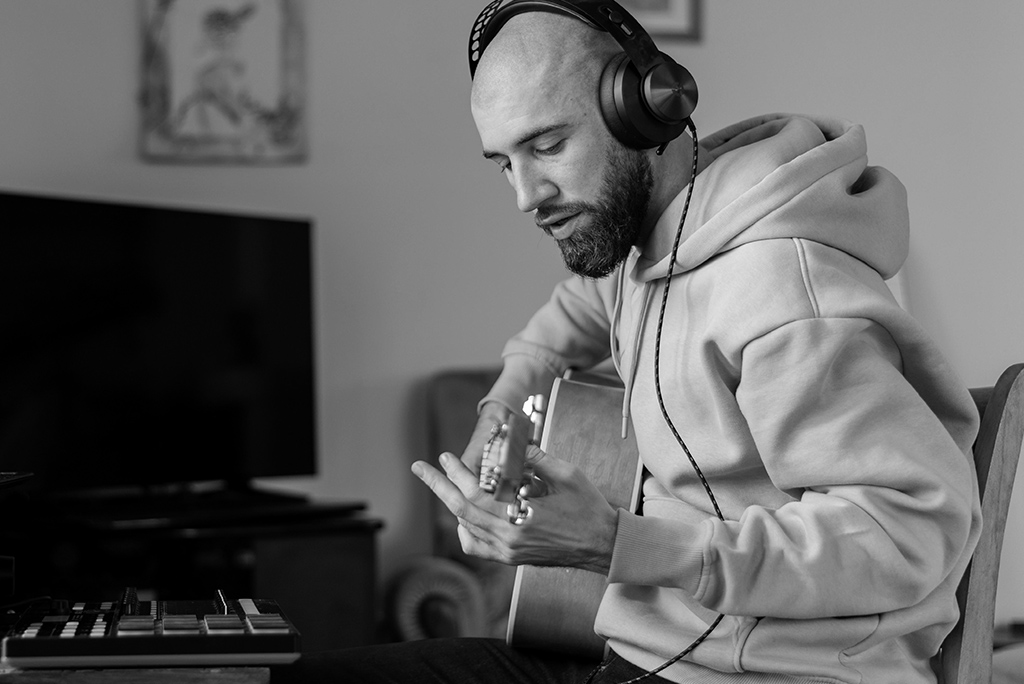
Performance Clips: Record yourself playing the hook of the song in your living room. Authenticity often performs better than polished production.
-
The “Story” Post: Tell the audience why you wrote the song. People connect with stories before they connect with melodies.
2. Leverage Spotify for Artists
The moment your song is delivered to distributors (like DistroKid or TuneCore), log into your Spotify for Artists dashboard.
-
Pitch to Editors*: You must do this at least 2–3 weeks before release day. A solid pitch increases your chances of landing on “New Music Friday” or “Fresh Finds.”
-
Update Your Canvas: Create a simple, looping 8-second visual for your track. It keeps listeners engaged and makes the song more shareable on Instagram Stories.
3. Build a “Digital Street Team”
You might not have a street team handing out flyers, but you have a community.
-
The Inner Circle: Create a small group chat (on Discord or WhatsApp) with your most loyal fans/friends. Give them early access to the track and ask them to share it the moment it drops.
-
User-Generated Content (UGC): Encourage followers to use your “Original Audio” for their own videos. Even a simple “coffee morning” vlog using your instrumental can trigger the algorithm.
4. Direct Outreach (The “Drip” Method)
Don’t just post a link and hope for the best. Be proactive:
-
Curator Outreach: Use platforms like SubmitHub or Groover to send your music to independent playlist curators and bloggers.
-
Email Marketing: If you have an email list, use it. Social media algorithms are fickle, but an email goes straight to your fans’ pockets.
5. Host a Virtual Release Party
On the night of the release, go live on Instagram, TikTok, or YouTube. * Play the track.
-
Answer questions about the production.
-
Do a live acoustic version. It creates a sense of “event” that a simple post cannot replicate.
* Pitching to Spotify’s editorial team
Phase 1: The Technical Requirements
Before you can pitch, you must satisfy two conditions:
-
Distribute Early: You must send your song to your distributor (DistroKid, CD Baby, Tunecore, etc.) at least 3 to 4 weeks before your release date.
-
Spotify for Artists: You must have access to your Spotify for Artists dashboard (web or mobile).
Phase 2: The Step-by-Step Process
Once your distributor delivers the track to Spotify, it will appear in your “Upcoming” tab.
-
Log in to Spotify for Artists.
-
Go to the Music tab and select Upcoming.
-
Choose the song you want to pitch and select Pitch a song.
-
Fill out the metadata: You’ll be asked for the genre, mood, and instruments used. Be honest. If you tag a Lo-fi hip-hop track as “Death Metal” to get attention, the algorithm will penalize you.
Phase 3: Writing the “Perfect Pitch”
You have a 500-character limit (not words, characters!). This is where most DIY artists fail by being too vague. Don’t just say, “I worked hard on this, please listen.”
Use this formula for your pitch:
-
The Hook (1 sentence): What makes the song unique? (e.g., “A nostalgic 80s synth-pop track recorded entirely on a vintage Juno-60.”)
-
The Vibe (Keywords): Mention 2-3 similar artists to help editors categorize you. (e.g., “For fans of Tame Impala and Beach House.”)
-
The Marketing Plan (The most important part): Editors want to know you are driving traffic to Spotify. Mention your social media following, planned ad spend, or upcoming press.
-
The Story: A tiny nugget of “why” this song matters.
The Bottom Line
Promotion isn’t about bragging; it’s about consistency. Your music deserves to be heard, and luckily, the tools to make that happen are sitting right there on your sofa with you.
Focus on engagement over numbers, and authenticity over perfection.